How businesses use AI for contracts: Nordic research

Key findings:
- 22% of Nordic businesses use AI to create legal contracts, with Finland leading the region
- The most common use is editing and refining contract text (53%), followed by drafting individual contract terms (45%)
- AI does not bear legal responsibility, so critical evaluation of its outputs is always essential
The management of legal documents (creation, signing and storage) is steadily moving towards digital workflows. This means adopting new tools, including AI, across different stages of the document lifecycle. In this article, we explore the findings of a recent study on how AI is being used in contract creation.
Expert in the spotlight
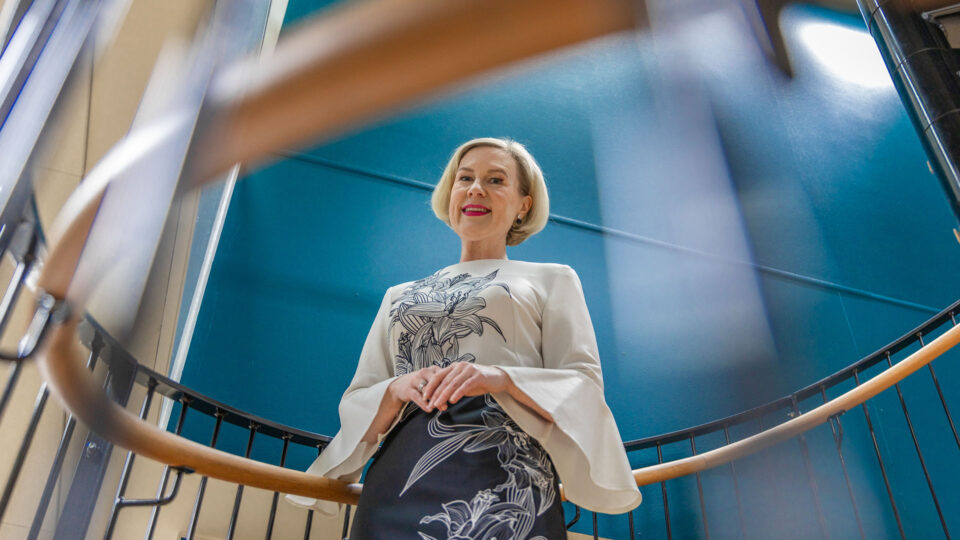
Elina Koivumäki
Lawyer and entrepreneur with over 25 years of experience in business law. Elina specialises in B2B contracting and commercial agreements, helping businesses navigate legal complexity in their day-to-day operations.
AI in contracting — a trend or the future?
A recent study conducted in partnership between Visma Sign and nSight Oy examines e-signing and contracting trends across the Nordic countries in 2026. The study gathered responses from over 900 Nordic businesses in Finland, Sweden and Norway. It looks at how organisations manage contracts, use AI, adopt e-signing and handle legal matters in their day-to-day operations.
The use of AI for contract creation is highest in Finland among the Nordic countries. According to the study, 22% of respondents said they use AI to create legal contracts. This figure is expected to grow as AI-assisted contracting continues to gain traction. It will be interesting to follow what new use cases emerge in the legal context as the technology evolves.
Elina Koivumäki, a lawyer and entrepreneur with over 25 years of experience in business law, welcomes the efficiency gains that AI brings to contract processes.
“Many contract terms, particularly those related to standard B2B trade and collaboration, can be drafted with the help of AI, which can also assist in reviewing contracts and identifying risks,” Koivumäki says.
I believe AI-assisted contracting will increase non-lawyers’ understanding of contracts and their involvement in negotiation processes, and that benefits everyone.
Businesses are using AI in a variety of ways
The study identified the most common AI use cases among Finnish businesses. The top use is editing and refining text. The second most common use is drafting individual contract terms. Notably, more than one in three respondents (36%) said they use AI to create or draft entire contracts.
The breakdown of AI use cases:
- Editing text for clarity: 53%
- Drafting individual contract terms: 45%
- Drafting entire contracts: 36%
- Suggesting additions: 30%
- Comparing contract versions: 23%
- Translation: 21%
“I hope future studies will show strong numbers for negotiation support alongside contract drafting. You can instruct AI to offer different perspectives on a chosen topic, taking into account information about the counterparty’s business, strategy and priorities. This allows parties to better argue their position based on what matters most to the other side,” says Koivumäki.
What risks should businesses be aware of?
When working with contracts, it is important to keep in mind legal liability and the role AI plays. AI does not bear legal responsibility and may not fully understand the specifics of a given situation. Its outputs should always be evaluated critically and in context.
The legal risks of AI are a relatively recent and still-emerging concern. Using AI for contracts requires the user to have their own legal knowledge and apply critical judgement. Contracts produced autonomously by AI can cause significant harm, for example by including terms that conflict with applicable law or that are commercially unreasonable.
Key challenges in contract management
There are several reasons why businesses turn to AI. It can speed up and simplify contract work, supporting drafting, ideation and text generation. One driver is a lack of legal expertise, which is the biggest challenge for businesses (21%) when it comes to contracts. Keeping up with legislative changes is another concern: 15% of businesses say they do not actively monitor legal updates and therefore may not reflect them in their contracts. Here, too, AI comes with caveats, as it may not be aware of the latest legal developments and can produce inaccurate or hallucinated information.
“Strategic legal advice will continue to rest largely with lawyers and other regulatory and business experts. It is difficult to feed AI the full history of a business or the tacit knowledge that is relevant when making various business decisions. AI may also provide answers that conflict with applicable law, regulatory requirements or case law, which is why I would not yet rely on it alone for contract negotiation and drafting,” advises Elina Koivumäki.

Liina Sirén is part of the marketing team at Visma Sign. She enjoys turning even the most complex aspects of digital agreements into clear, accessible insights that help customers work smarter.