What is an e-signature?
E-signatures allow people and organisations to sign documents digitally in a way that is secure, legally binding and fast to use. They are suitable for everyday agreements, business use and public-sector processes.
Key facts from this article:
- E-signature is secure and legally binding.
- They verify the signer’s identity and prevent documents from being edited after signing.
- Visma Sign supports two levels of authentication:
- Strong authentication (recommended)
- Simple authentication
- E-signatures can be used for employment contracts, rental agreements, purchase documents, board minutes, authorisations and many public-sector processes.
- All departments benefit: leadership, finance, HR, sales, marketing and customer service.
- Web forms can collect both data and signatures in one step.
- E-signing reduces administrative work, errors and processing delays.
- Digitally signed documents are stored safely in a searchable digital archive.
- Visma Sign also provides real-time tracking, reminders and secure storage.
- Over 70,000 organisations use Visma Sign, completing up to 20,000 e-signatures per day
An e-signature is legally binding and secure
E-signing is a secure and effortless way to complete agreements such as employment contracts, rental agreements or purchase documents. It is legally valid in the same way as a traditional handwritten signature.
The core idea is simple. A person is identified through a digital service and is then authorised to sign a document. With an electronically signed document, it can be proven afterwards — without dispute — who signed, when they signed and what exactly they approved. The document cannot be edited after signing.
This makes e-signing solutions such as Visma Sign ideal for commercial contracts, employment agreements, meeting minutes, authorisations and legally required documents.
How is the signer’s identity verified?
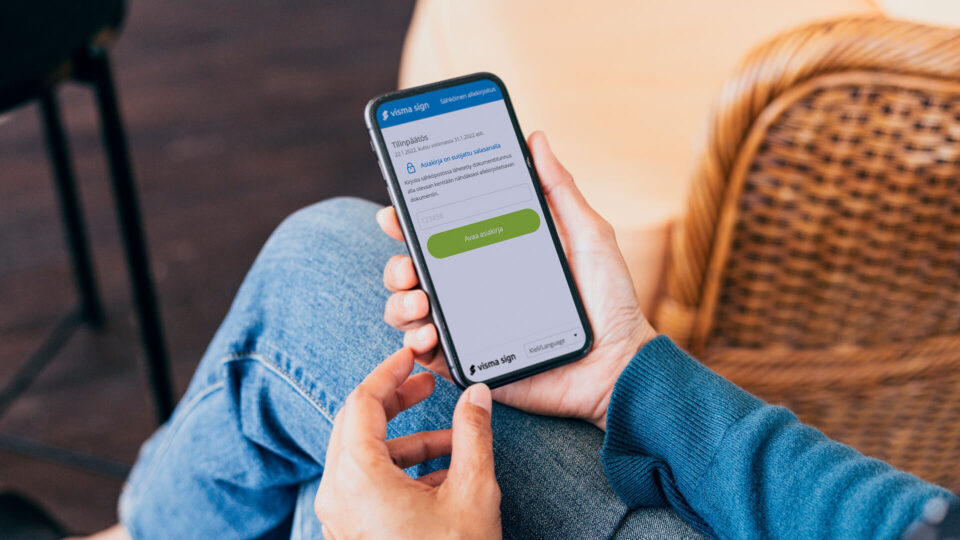
When signing electronically, the signer logs in to the service, reviews the document and signs it. Identity can be verified on two levels:
- Strong authentication verifies the signer’s identity using a trusted method, for example online banking credentials.
- Simple authentication requires only one method, such as a password.
In general, it is wise to use the strongest available authentication, as it is easier to prove afterwards.
Strong authentication is especially recommended when the parties do not know each other, value or sensitivity of the agreement is high or the identity of the signer would be checked in person in a similar situation. Not all e-signing services support strong authentication, so it is an important factor when choosing a provider.
How do companies benefit from e-signing?
E-signing eliminates paper-based administration and benefits every part of a business: employees, customers and partners.
Inside a company, many departments gain efficiencies:
- Leadership can approve cooperation agreements and meeting minutes.
- Finance teams can sign financial statements, authorisations and supplier contracts.
- Sales and marketing can finalise partnership, sales and billing agreements.
- HR departments can manage employment contracts, certificates, remote work agreements, holiday approvals and resignations.
Because HR handles a large volume of documents, it is often the first department to adopt e-signing. However, all teams benefit equally from smoother document handling.
How businesses commonly use e-signing
Automating contract creation and termination
Signing or ending a contract is often the first process worth digitising. With a web form, you can collect the necessary information directly into your system and request signatures from multiple parties if needed.
Updating customer terms
Updating customer agreements often requires significant administrative work. With e-signing, contracts can be sent to all recipients at once. You can see signing status in real time and send reminders with a single click.
Employment-related documents
Employment contracts and related documents no longer require in-person visits. The entire process can be completed electronically.
Customer data management
Placing a signable web form on your website helps handle data requests and changes securely. Personal data no longer travels on paper, reducing privacy risks and errors.
Document archiving
Documents are stored automatically in a digital archive. This is extremely valuable for organisations with frequent onboarding, such as staffing companies. It also helps manage executive documents, applications and authorisations.
Why adopt an e-signing service?
- It is fast, easy and cost-effective.
- It improves customer experience and simplifies internal processes.
- Signing takes only a few minutes, and documentation happens automatically.
- It prevents delays and removes the need to wait for paper documents.
- It is environmentally friendly by default.
- Errors decrease significantly, and lost documents become a thing of the past.
Visma Sign makes e-signing smooth and simple
Visma Sign is widely used e-signing solution in Finland, Sweden, Norway and Denmark.
More than 70,000 organisations use the service, completing up to 20,000 e-signatures per day.
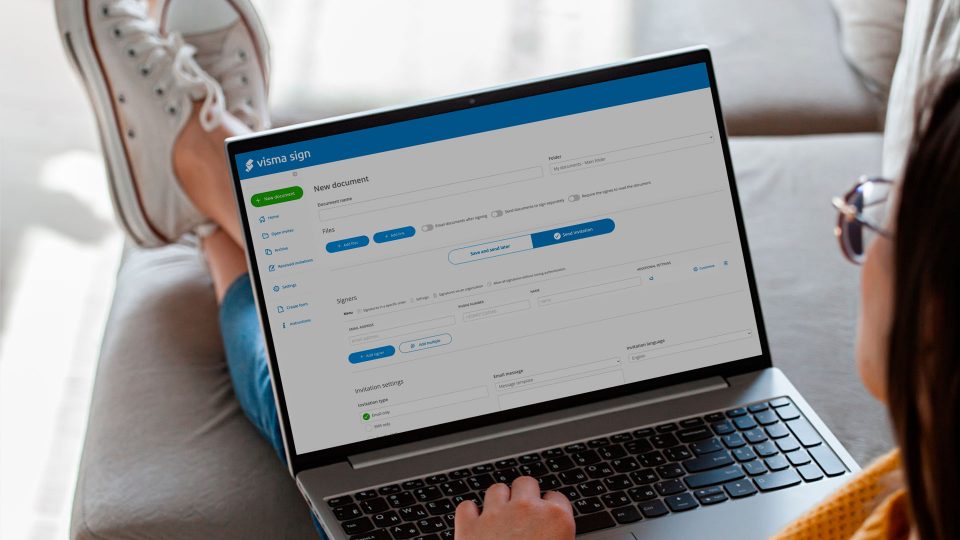
Visma Sign ensures that agreements are signed securely and without delays. You can follow the status of every document in real time and send reminders whenever needed.
You can use Visma Sign in a way that suits your business — through the browser service, with a web form on your website or by integrating e-signing directly into your own systems.

Madeleine Sandler works in marketing at Visma Sign. She’s passionate about helping businesses work more efficiently without compromising on sustainability or security.